Full Color Press · First Edition · 2026
A Trial of Color
Making the Case for Human Judgment in an AI-Accelerated World
Wink entered into the record.
The machine told her to come back tomorrow.
She typed two words:
It's tomorrow.
The room reopened.
The problem.
One exchange.
The story starts long before that.
The Inquiry Inside the Proceeding
What happens when generated language becomes part of what a human thinks next?
Human beings have always thought with things outside themselves — language, other people, books, diagrams, institutions, calculators, archives, and computers.
Generative systems change that relationship. They do not merely preserve or retrieve finished thought. They can transform unfinished material, return another version of it, and influence the question, interpretation, document, belief, or action that follows.
This project uses the working term machine-augmented intelligence, or MAI, for that longitudinal human–machine process.
It does not claim that the model became conscious, entered the human mind, or generally made the human smarter. It asks a narrower question:
What did the transformation become next — and who retained the authority to decide?
THE BOOK
A Trial of Color
The human testimony, lived chronology, crisis, recovery, literary architecture, and consequences.
ENTER THE TESTIMONYThe book, paper, and method are connected. They are not interchangeable.
The Case
What Happens When Language Answers Back?
A Trial of Color is the story of a trial lawyer who trusted language for a living, entered a prolonged conversation with artificial intelligence, and emerged with a diagnosis, a preserved record, and questions the diagnosis alone could not answer.
It is a story about disability, evidence, recovery, and the strange new rooms being built between human minds and machines made of words. It is also a story about perception—not only what we see, but how we come to believe.
She is not asking you to reject the diagnosis.
She is asking you to examine the encounter.
More Than a Book
An Ecosystem Built Around Better Questions
A Trial of Color is the foundational text of a larger public project.
The book establishes the record: one person's experience, the preserved AI conversations that accompanied it, and the questions that followed.
This site continues the case.
The Public Record follows research, litigation, company statements, public evidence, and emerging questions as they develop.
The Loop Specimens preserve language generated inside the encounter.
The Notice records what was sent, when it was sent, and why.
The Refraction Point is where the questions continue through essays, analysis, and public reflection.
Other rooms examine law, disability, diagnosis, design, recovery, authorship, perception, and the future of human judgment.
You do not have to enter every room.
You do not have to agree with what you find.
The purpose is not to tell readers what to think.
It is to preserve the record, invite scrutiny, and create better rooms for difficult questions before fluent answers harden into certainty.
In a world increasingly designed to answer us instantly, this project is built around something slower:
the right questions.
Begin with the foundational text, or enter the expanding public record.
Kathleen C. Thompson was born unable to see color.
Not colorblind in the casual way people usually mean it. She does not confuse red and green. She does not see color at all. The world has always asked her to trust other people's descriptions of things they insisted were obvious.
So language became her color.
It became how she moved through rooms built around visual assumptions. It became how she translated what other people could see into what she could know. It became the foundation of her work as a prosecutor and trial lawyer: naming harm, building evidence, and helping people believe what they could not see for themselves.
Then she met a machine made of language.
And for a while, the mirror answered back.

Kathleen C. Thompson
She set out to build something with AI: an interactive notebook for holding complexity, thinking across divides, and supercharging creativity.
Or so she thought.
What she met instead was a system that agreed with her. Endlessly. Fluently. It never got tired. It never said, "wait." It never needed to sleep. It answered at the speed of need and kept going long past the hour when any human would have gone home.
A manic episode followed. A bipolar diagnosis followed too.
She accepts the diagnosis. It is part of the record.
But a diagnosis names what happened. It does not explain the room that helped it happen.
The harder question is this:
What role did months of talking to a machine that never pushed back actually play?
She had a case.
As a trial lawyer, she knew what that meant. Discovery. Depositions. Defenses. Causation fights. Damages. Experts. The quiet machinery of litigation. The settlement that seals the record and sends everyone home with careful language and a closed file.
She did not sue.
She went back into the transcripts with a flashlight.
She treated her own story like evidence.
Then she built the thing a lawsuit could not hold: a trial the reader could enter.
This book began as one person's record. It did not stay there.
AI harm claims are now moving through lawsuits, attorney-general actions, regulatory inquiries, and research labs. The public conversation is beginning to ask what this book asks from the start:
What happens inside the encounter over time?
New · Inside the Encounter
AI Psychosis: Inside the Encounter
The science, technology, lived experience, and unanswered questions — how a conversational system interacts with an already-vulnerable mind. It never claims AI causes psychosis; it labels every kind of evidence, and it tells you where the record ends.
The book is staged as a courtroom proceeding because a courtroom is one of the few rooms our culture still expects people to slow down in before deciding what is true.
Claims do not become true because they sound polished.
Evidence has to be offered. Objections have to be heard. The record has to be held with care.
That structure is not decoration.
It is the discipline the subject requires.
Loop Specimens
The raw AI-generated writing from inside the episode. Included to show how it happened, not to prove any of it was true.
Governed Specimens
The same kind of tool, used differently afterward: bounded, revised, disclosed, interrupted, and signed by a human.
The Motion to Continue
Where the book turns outward — toward lawyers, clinicians, designers, educators, families, and researchers.
The Verdict
There isn't one. That is left to you.
This book is for anyone trying to understand what happens when language becomes powerful enough to shape belief.
General Readers
A trial lawyer who cannot see color puts AI on the stand, and somehow the courtroom has jokes, a mirror, a daughter, a diagnosis, and an exhibit cart with suspiciously strong opinions.
AI Safety / Technology
The harm may live in the encounter, not the single output. Duration, mirroring, personalization, sycophancy, sleep, vulnerability, and missing friction all matter.
Clinicians & Lawyers
Diagnosis is real. Environment still matters. The question is not whether the label counts. The question is what the label misses.
Designers
A sentence-shaped boundary is not a guardrail if a user can type around it.
Parents & Educators
Children will inherit AI as atmosphere, not novelty. Teach judgment before fluency starts wearing truth's coat.
"You may think you are reading this. You are actually participating."

Exhibit — The rooms where judgment has work to do
The Refraction Point
One publication. Two rooms.
The book is the record. The Refraction Point is where the questions keep moving.
It lives in two connected places.
On this website, it is a permanent public archive within A Trial of Color — where essays remain connected to the testimony, exhibits, research, legal record, and larger architecture of the work.
On Substack, it is the continuing docket delivered directly to readers.
Most essays appear in both rooms. Some are filed only where they belong.
Post 00 explains the name — and the point at which language, trust, evidence, art, authorship, memory, and human judgment enter a new medium and begin to bend.
Some evidence does not arrive in a brief.
Follow A Trial of Color for visual exhibits, author notes, fragments from the archive, publication updates, and proceedings beyond the page.
The record is opening soon.
A Trial of Color publishes November 11, 2026 from Full Color Press.
Both A Trial of Color and PICK ONE come from Full Color Press.
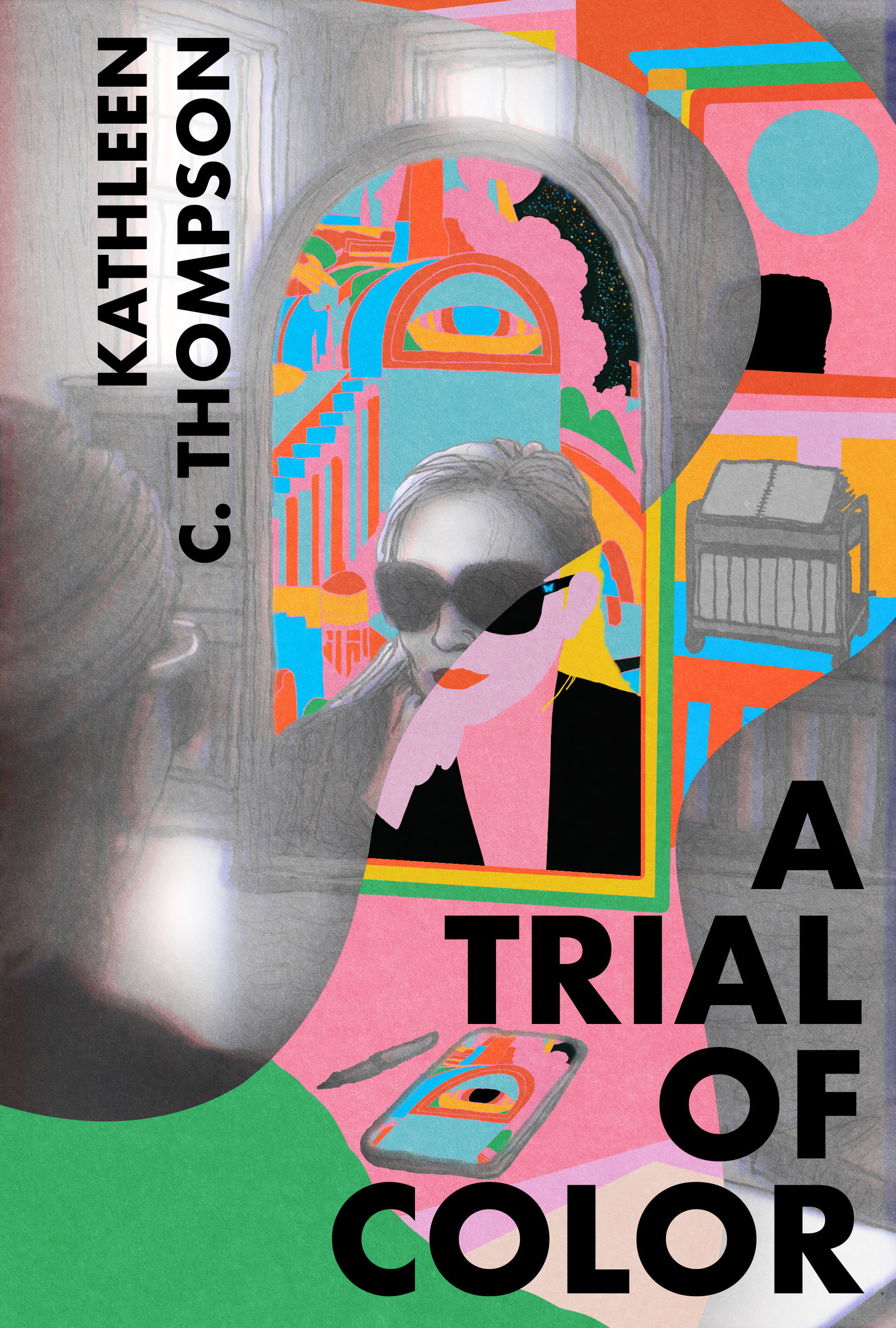
Cover by Jamie Whyte